


Installed Base Analytics: The OEM’s Most Underused Growth Lever
Installed base analytics is the practice of collecting, unifying, and analyzing data about every piece of equipment an OEM has manufactured, sold, and deployed, to identify revenue, service, and retention opportunities across the entire asset lifecycle. It transforms fragmented records scattered across ERP, CRM, field service, and spreadsheets into a
Manufacturing CRM Isn’t Built for the Industrial Aftermarket
A new study commissioned by ServiceNow reveals what aftermarket leaders have known for years – the enterprise software stack is failing manufacturers where it matters most: post-sale. Key Takeaways A December 2025 study by Endeavor Business Intelligence, commissioned by ServiceNow and published via IndustryWeek, surveyed over 200 manufacturing executives at

The 30–60% Installed Base Revenue Opportunity is sitting untouched
Every equipment OEM has two businesses. The one it actively manages – new equipment sales – and the one it mostly ignores: the installed base it spent decades building. That second business is where the real money is. And most OEMs are leaving it on the table. The Gap Between

Installed Base Visibility: Where Is Your Equipment, Really?
If you look at your ERP right now, I can almost guarantee what you’ll find: a list of thousands of “Sold-To” addresses. You see the name of the contractor who bought the machine in 1995, or the procurement hub that processed the PO five years ago. Maybe a distributor in

The AI Churn Index: Spotting High-Risk customers before they buy from the competition
For Industrial Original Equipment Manufacturers (OEMs), the installed base is the definitive engine of profitability. The equipment already deployed in the field is expected to generate two to three times its initial purchase price in highly profitable aftermarket revenue, and more than 70% of future new equipment sales will originate
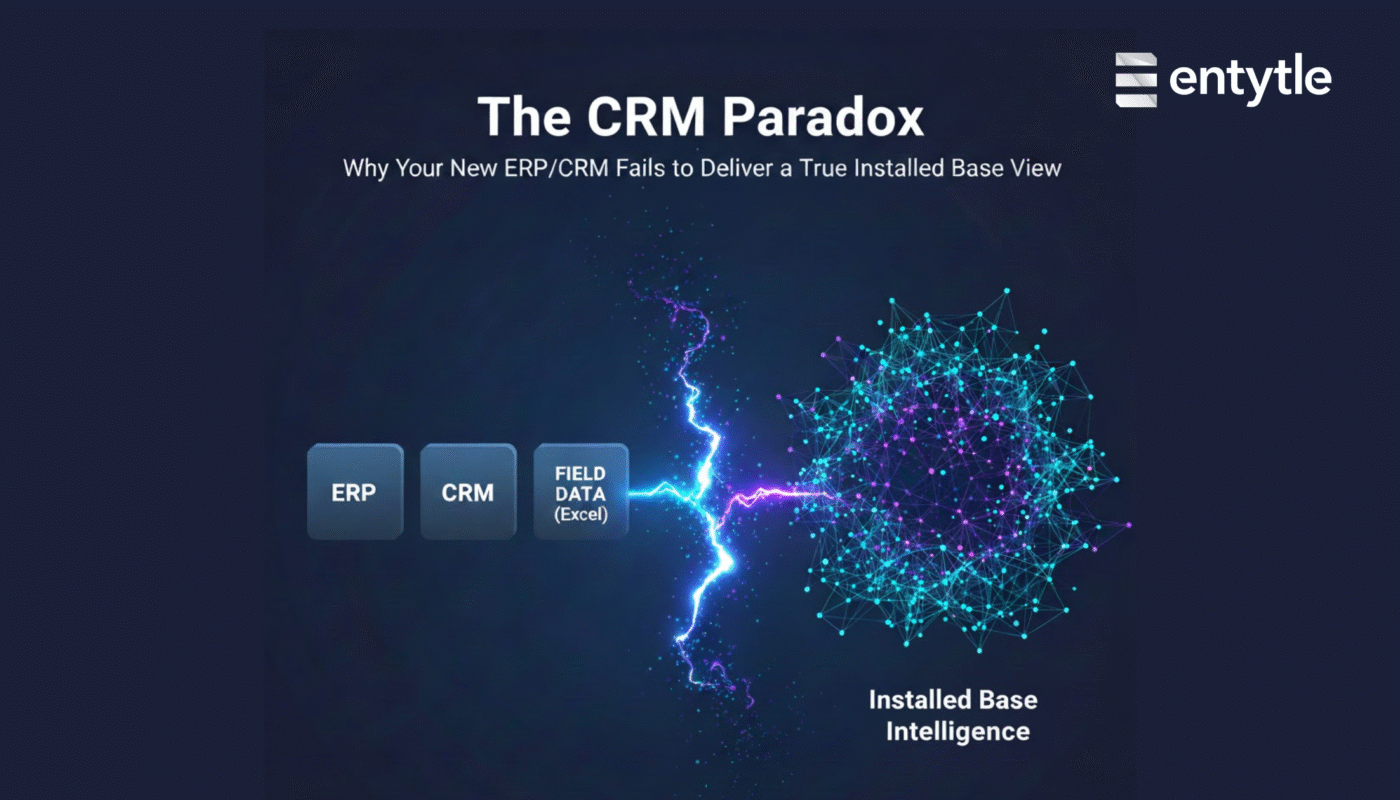
The CRM Paradox: Why Your New ERP/CRM Fails to Deliver a True Installed Base View
You have invested substantially in modernizing your core enterprise systems. Whether it’s a multi-million-dollar ERP overhaul or the global rollout of a new CRM and Field Service platform, the promise is the same: a holistic view of the customer and your assets. Yet, when Service or Aftermarket leaders ask one
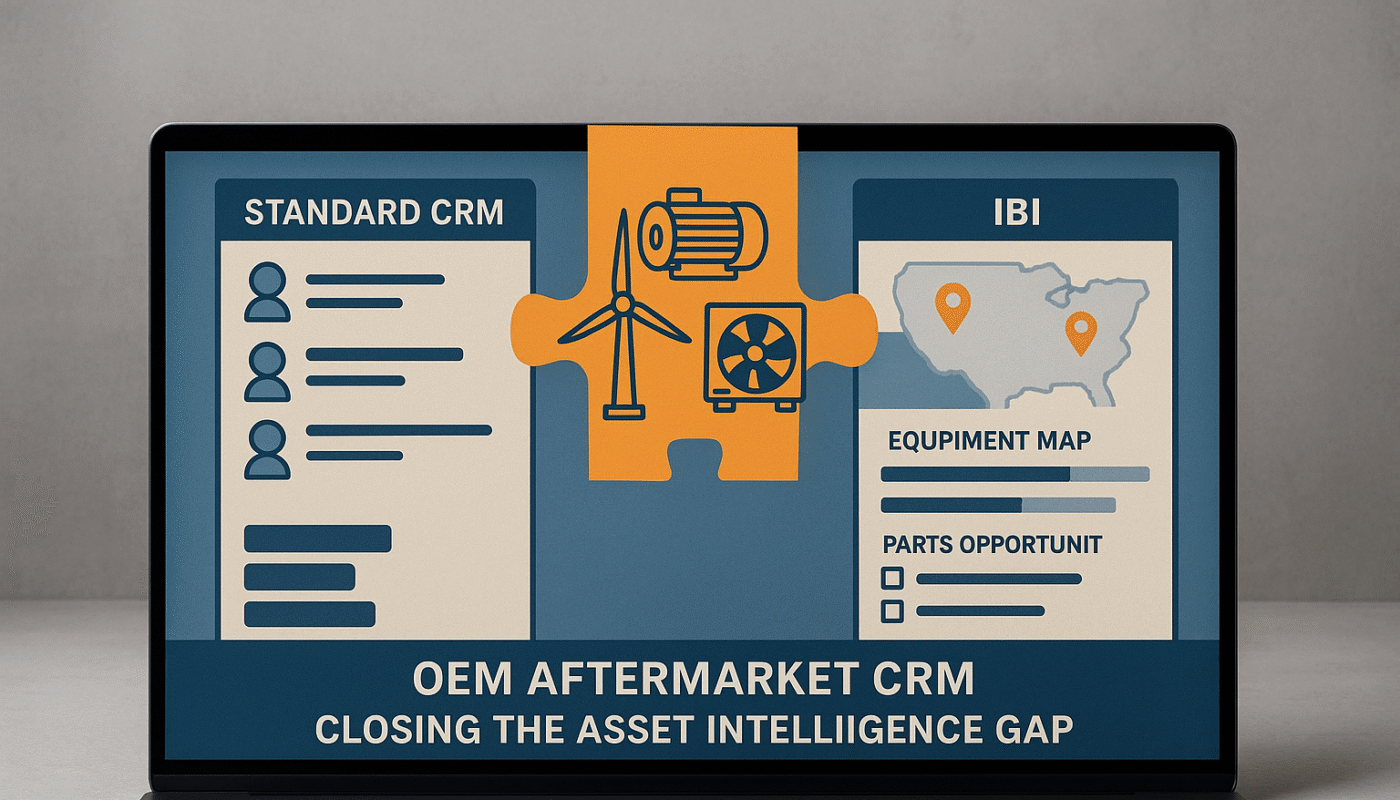
OEM Aftermarket CRM: Why Standard CRMs Fall Short for Parts
TL;DR: Standard OEM aftermarket CRM systems track customer contacts and sales pipelines, but they weren’t designed to manage complex equipment assets across their lifecycle. For OEMs generating 40-70% of revenue from aftermarket parts and services, this gap means missed cross-sell opportunities, reactive service delivery, and invisible revenue potential sitting in

Asset Lifecycle Management for OEMs: The Definitive Guide
KEY TAKEAWAYS What Asset Lifecycle Management Means for OEMs Asset lifecycle management for OEMs is the process of tracking industrial equipment from the point of shipment through installation, active operation, maintenance, and eventual replacement, across customer facilities the manufacturer does not own or control, in order to identify and capture

Customer Retention in Manufacturing: Why OEMs Lose Accounts (and How to Stop It)
Customer churn in manufacturing is the gradual loss of existing accounts through declining purchasing activity, lapsed service contracts, and eventual competitive displacement – typically without a single formal cancellation event. Unlike SaaS or consumer businesses, where churn is a measurable subscription metric, industrial customer churn is a slow fade that
Aftermarket Parts Strategy Playbook for Industrial OEMs
An aftermarket parts strategy is how an industrial OEM systematically identifies, prices, and sells replacement parts and components into its existing customer base – moving beyond reactive order-taking to proactive, data-driven revenue generation. Aftermarket parts strategies cover which accounts to target, what parts to offer, when to engage, and how
Installed Base Analytics: The OEM’s Most Underused Growth Lever
Installed base analytics is the practice of collecting, unifying, and analyzing data about every piece of equipment an OEM has manufactured, sold, and deployed, to identify revenue, service, and retention opportunities across the entire asset lifecycle. It transforms fragmented records scattered across ERP, CRM, field service, and spreadsheets into a
Asset Lifecycle Management for OEMs: The Definitive Guide
KEY TAKEAWAYS What Asset Lifecycle Management Means for OEMs Asset lifecycle management for OEMs is the process of tracking industrial equipment from the point of shipment through installation, active operation, maintenance, and eventual replacement, across customer facilities the manufacturer does not own or control, in order to identify and capture
Customer Retention in Manufacturing: Why OEMs Lose Accounts (and How to Stop It)
Customer churn in manufacturing is the gradual loss of existing accounts through declining purchasing activity, lapsed service contracts, and eventual competitive displacement – typically without a single formal cancellation event. Unlike SaaS or consumer businesses, where churn is a measurable subscription metric, industrial customer churn is a slow fade that
Aftermarket Parts Strategy Playbook for Industrial OEMs
An aftermarket parts strategy is how an industrial OEM systematically identifies, prices, and sells replacement parts and components into its existing customer base – moving beyond reactive order-taking to proactive, data-driven revenue generation. Aftermarket parts strategies cover which accounts to target, what parts to offer, when to engage, and how
Installed Base Analytics: The OEM’s Most Underused Growth Lever
Installed base analytics is the practice of collecting, unifying, and analyzing data about every piece of equipment an OEM has manufactured, sold, and deployed, to identify revenue, service, and retention opportunities across the entire asset lifecycle. It transforms fragmented records scattered across ERP, CRM, field service, and spreadsheets into a